
Updated DOE guidelines and classifications
There are now six classifications of electric vehicles (EVs) in the Philippines—up from the previous four—based on the amended Department of Energy (DOE)
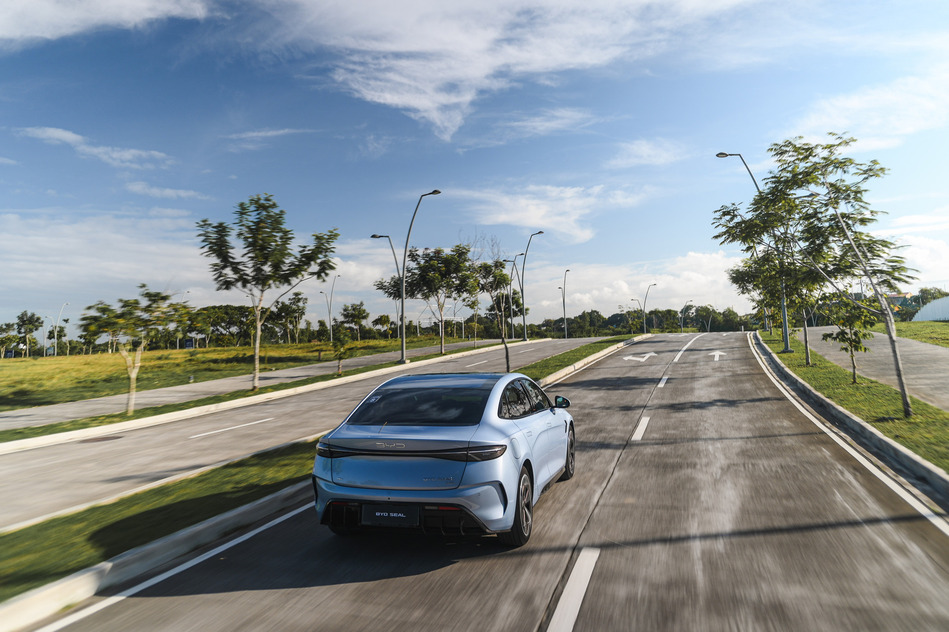


Updated DOE guidelines and classifications
What category does your new energy vehicle (NEV) fall under?
Here are the amended Department of Energy (DOE) guidelines for EVs—for if you want to delve deeper into how the Philippines classifies the many types of EVs you will encounter on local roads
There are now six classifications of electric vehicles (EVs) in the Philippines—up from the previous four—based on the amended Department of Energy (DOE) guidelines.
According to DOE Department Circular (DC) No. DC2025-09-0015, which is an amendment of the DC No. 2023-05-0012 and published on its website on last September 2025, EV classifications are namely:
Battery EVs (BEVs), or those with a traction battery as power source, including the pure electric vehicles.
Hybrid EVs (HEVs), or those with both rechargeable energy storage system (RESS) and a fueled power source, and have tailpipe emissions.
Light EVs (LEVs), or those used in micromobility such as electric scooters, electric bicycles or those that weigh less than 50kg.
Plug-in Hybrid EVs (PHEVs), or the HEVs with RESS that can be charged from an external energy source and have tailpipe emissions.
Range Extender/d EVs (REEVs), or the HEVs propelled by an electric motor only with a fueled power source specifically used for charging the RESS; and
Fuel Cell EVs (FCEVs), or those with no tailpipe emissions that use a fuel cell to generate power.
Previously, EVs were only classified as BEVs, HEVs, LEVs, and PHEVs. Does this help clear things up?
Read more latest newsand updates
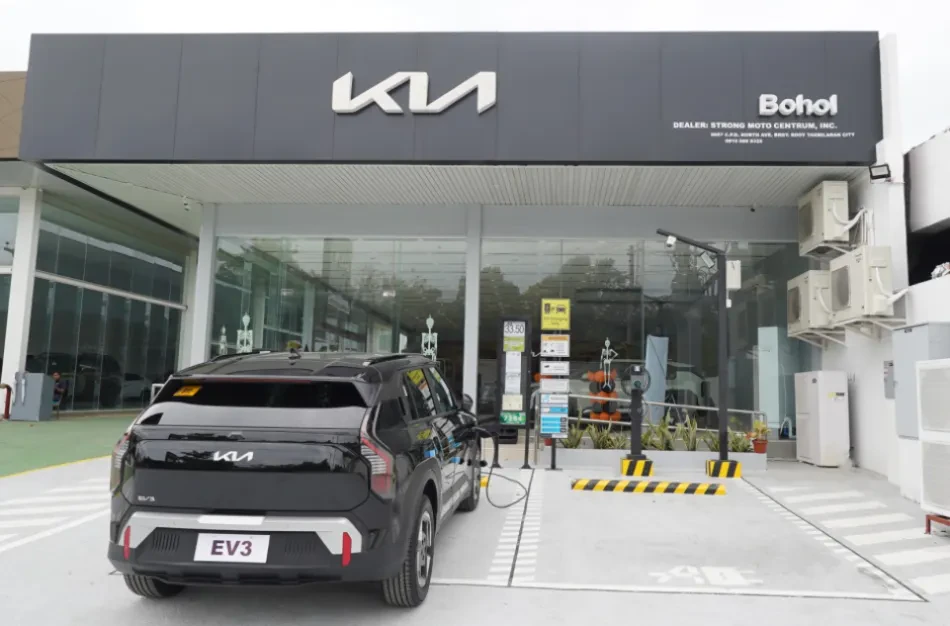
ACMobility expands presence in Visayas, opens first EV Charging Hub in Bohol
ACMobility, the country's leading provider of end-to-end solutions for electric mobility, has launched the first electric vehicle (EV) charging hub in Bohol, located at the new Kia dealership in Tagbilaran City. The hub has two 7-kW AC chargers accessible to the public via Evro, ACMobility’s partner EV charging app. Putting the province on the EV map, the charging hub is seen to open the Bohol market to EV ownership and pave the way for the installation of more EV charging stations on the island. "The island province of Bohol is an important connector within the Philippine EV Spine. With the opening of our first charging station on the island, coupled with the new dealership of our partner brand Kia, we are making electric mobility more accessible for residents and visitors in Bohol while supporting the growth of the local economy," said Carla Buencamino, Head of Mobility Infrastructure at ACMobility. "By putting up the island’s first EV charging station located in Kia Bohol, we open up the possibility of people owning EVs because they no longer need to worry about where to charge their vehicles. Regardless of whether fuel prices are high or not, the important thing is that there is freedom of choice because there is availability,” said Louise Camille Lumapas, Kia Philippines Dealer Principal. Tagbilaran City Mayor Jane Yap said the new EV Charging Hub will boost tourism in Bohol, designated as the Philippines' first UNESCO Global Geopark for its geological and cultural importance. "This is a proud moment for Tagbilaran and for the whole island of Bohol. Having the first EV charging station here shows that Bohol is ready to move with the times while protecting what makes our island special," said Yap, adding that it aligns with the city's push to be "progressive, innovative, and environmentally responsible." The mayor said the charging hub will also give both locals and visitors the confidence to drive EVs on the island, encouraging more travel and inviting more investors to come to Bohol. ACMobility continues to expand its reach across Visayas, bringing its brand of accessible and reliable EV charging services to more Filipinos. ACMobility’s EV charging network, the Philippine EV Spine, is the largest in the country with over 240 charging locations and more than 600 charge points.
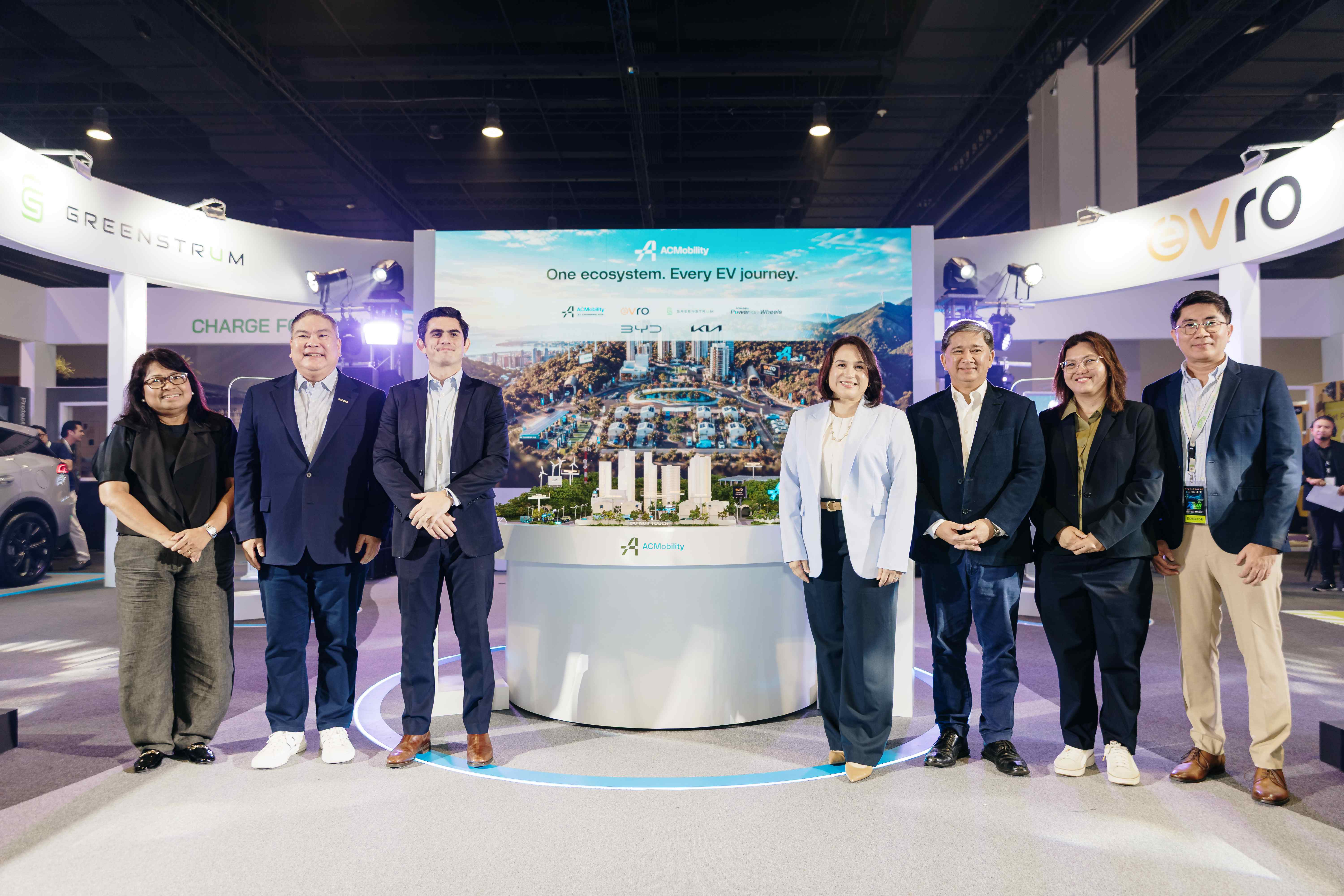
ACMobility showcases end-to-end EV ecosystem in largest display yet at 14th Philippine Electric Vehicle Summit
Manila, Philippines (October 22, 2026) — ACMobility, the country’s leading provider of end-to-end electric mobility solutions and a member of the Electric Vehicle Association of the Philippines (EVAP), mounted its largest and most comprehensive interactive display yet at the 14th Philippine Electric Vehicle Summit (PEVS) 2026. Showcasing its position as the nation’s prime mover in sustainable transport, ACMobility brought together its world-class vehicle brands, advanced digital technology, and cutting-edge charging infrastructure to prove that a seamlessly interconnected ecosystem is key to unlocking mass electric vehicle (EV) adoption across the country. Nationwide Infrastructure Ecosystem Central to ACMobility’s showcase is an extensive lineup of nationwide charging solutions built to support individual EV drivers and enterprises alike at every step of their journey. The ecosystem begins with Greenstrum, which offers professionally installed charging solutions, proactive maintenance, and local technical support for both home and enterprise. On the road, drivers rely on the expanding Philippine EV Spine, ACMobility’s public charging hub network spanning over 240 strategic locations and 600+ charge points nationwide, making EV drives possible from Pagudpud in the north to Davao City in the south. Covering more than 40% of the country's total public charging network as of end-June 2026, these hubs feature both AC and DC fast chargers reaching up to 480kW. For off-grid or roadside support, Power-on-Wheels provides flexible on-demand charging for emergencies, events, and areas where fixed chargers are not available. Unifying these physical touchpoints is Evro, ACMobility’s partner EV charging app which now has over 100,000 registered users. Currently the country’s leading e-mobility service provider, Evro allows drivers to locate DOE-accredited chargers, plan routes, monitor sessions, and complete digital payments across the ACMobility network and partner charge point operators. "Through the Philippine EV Spine, our nationwide mobility infrastructure now connects drivers all the way from Northern Luzon down to Mindanao, proving that long-distance EV travel is a reality today. By combining home charging solutions, public hubs, mobile charging support, and a seamless digital experience via the Evro app, we are ensuring that EV drivers can truly charge anywhere and drive everywhere,” said Carla Buencamino, Head of Mobility Infrastructure at ACMobility. Accelerating EV Adoption Through BYD and Kia Complementing its charging footprint, ACMobility highlighted its diverse portfolio of passenger vehicles, catering to a wide range of consumer needs and preferences. ACMobility brings cutting-edge battery technology, safety, and accessible new energy vehicles to Filipino commuters through BYD. Through Kia, the company offers premium EV innovation, engineering excellence, and elevated driving experiences, with the launch of the all-new Kia PV5 Cargo, designed as a purpose-built electric commercial solution for local business logistics. “At ACMobility, our mission has always been to make innovative and reliable mobility solutions accessible to more Filipinos,” said Jaime Alfonso Zobel de Ayala, Chief Executive Officer of ACMobility. “We’re working toward that goal by expanding our charging network and offering vehicles from global brands such as BYD and Kia. Through these efforts, we hope to make modern mobility a part of everyday life for more Filipinos.” ACMobility remains committed to advancing electric mobility through sustained private sector investment, infrastructure development, and multi-sectoral partnerships. By bridging home, road, mobile, and digital solutions into one cohesive ecosystem, ACMobility continues to lead the charge toward making sustainable transport accessible to all Filipinos. Visit ACMobility at the 14th Philippine Electric Vehicle Summit 2026 (SMX Convention Center Manila, Oct 22–24) to explore its charging infrastructure and test-drive the latest NEVs from BYD and Kia.
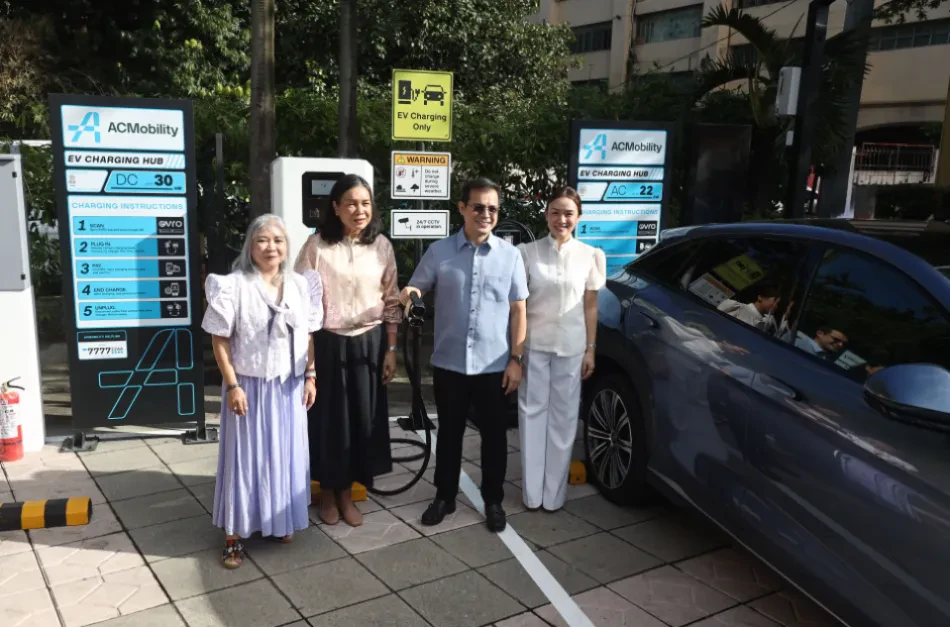
ACMobility opens Manila’s first EV charging hub, to build two more in city hospitals
ACMobility, the country’s leading provider of end-to-end electric mobility solutions, on Monday opened the first publicly accessible electric vehicle charging hub in the city of Manila, with two more lined up through its collaboration with the city government. Manila Mayor Francisco “Isko Moreno” Domagoso and Manila Vice Mayor Angela Lei “Chi” Ilagan-Atienza led the inauguration of the ACMobility EV Charging Hub at the Kartilya ng Katipunan (Bonifacio Shrine) near the Manila City Hall on October 19, 2026, with Maria Bejoc, ACMobility’s Head of Business Development and Network Operations, and Yvonne Castro, ACMobility’s Head of Government Engagements. The hub is equipped with two EV chargers: one 22-kW AC charger, which can recharge a vehicle to up to 80% capacity in at least three hours, and one 30kW DC charger, which can power up an EV to up to 80% in 30 minutes to an hour. ACMobility is set to build two more EV Charging Hubs in Manila, located at city-run hospitals, the Bagong Ospital ng Maynila and the Sta. Ana Hospital. “We are honored to be the first charge point operator to open a publicly accessible charging hub in the country’s capital city. This development is significant as Manila serves as a role model for other cities and towns across the country. We hope the opening of this charging hub encourages other local government units to embrace electric mobility and start building mobility infrastructure,” said Bejoc. Domagoso said the Manila EV charging hub shows how City Hall is looking to address future needs with tech-based solutions that private sector partners can provide. “Here is the proof where the government is looking at the future, looking at future problems, and there will be. But in the absence of resources, or with limited resources, we work with the private sector,” the mayor said. ACMobility operates the country’s largest network of EV Charging Hubs, known as the Philippine EV Spine, with over 240 locations and more than 600 charge points nationwide. These chargers are part of the company’s electric mobility ecosystem, which provides reliable charging solutions for the home and enterprises, as well as fleet and on-demand charging.