
News

Charge Forward: ACMobility and Shell Unite to Expand National EV Charging Network
September 16, 2025 - Taguig, Philippines - ACMobility, Ayala’s mobility solutions group and a leading provider of electric vehicle (EV) charging infrastructure in the Philippines, has partnered with Shell Pilipinas Corporation (Shell) to bring new charging stations to Shell service stations nationwide. The partnership marks a significant step toward ACMobility’s vision to deploy more than 2,500 charging points, while strengthening the Philippine EV Spine, the country’s first nationwide EV charging backbone.
“Shell is one of the most trusted service providers for motorists, with sites in key areas nationwide. ACMobility is pleased to welcome Shell as a partner in delivering the Philippine EV Spine Network,” said Carla Buencamino, Head of Mobility Infrastructure at ACMobility. “Beyond expanding infrastructure, this collaboration supports the growing EV community and strengthens the country’s transition to sustainable mobility.”
The Philippine EV Spine is ACMobility’s nationwide infrastructure network designed to support seamless, long-distance EV travel across Luzon, Visayas, and Mindanao. By leveraging Shell’s trusted network of service stations, ACMobility aims to rapidly expand this backbone, giving EV drivers greater confidence and convenience on the road. With such wider accessibility, it aims to ease concerns about range anxiety and ensure Filipinos’ reliable access to charging hubs wherever and whenever they travel.
50 Stations in First Phase, All Integrated with Evro
The initial rollout of ACMobility charging stations will take place at 50 Shell service stations nationwide, with over a hundred charging points to be installed. The first 20 sites are scheduled to begin installation in the last quarter of 2025, starting with charge points at select Shell stations across Luzon, Visayas, and Mindanao. The remaining 30 are set to follow in 2026. Each station will be equipped with DC fast chargers ranging from 60 to 120kW to meet the growing needs of EV drivers.
Once operational, EV owners will be able to locate, monitor, and pay for charging sessions through the Evro app. The app is run by Evro, the pioneering and largest e-mobility service provider and partner of ACMobility. In August, Evro and Shell announced a partnership that allows app users to access information on Shell Recharge EV charging stations, further enhancing visibility and convenience.
“Shell shares ACMobility’s vision of advancing sustainable mobility in the Philippines,” said Jolo Valdez, Head of Non-Fuel Retail and E-Mobility for Mobility at Shell. “By opening our stations to host ACMobility’s charging infrastructure, we are helping create a more reliable and accessible network for EV drivers nationwide.”
Advancing ACMobility’s Goals, Strengthening the EV Spine
With this partnership now in progress, ACMobility is gaining stronger momentum toward its 2025 target. Its EV charging hubs are rapidly expanding nationwide, with an aggressive rollout across key cities like Makati, Taguig, and Cebu, as well as in Luzon, Visayas, and Mindanao. By adding Shell to its growing network of partners across the residential, commercial, food, and hospitality sectors, ACMobility is making EV charging more accessible and inclusive while reinforcing the Philippine EV Spine as the backbone of sustainable mobility.
For those interested in establishing an ACMobility charging station or exploring partnership opportunities, visit https://acmobility.ph/.
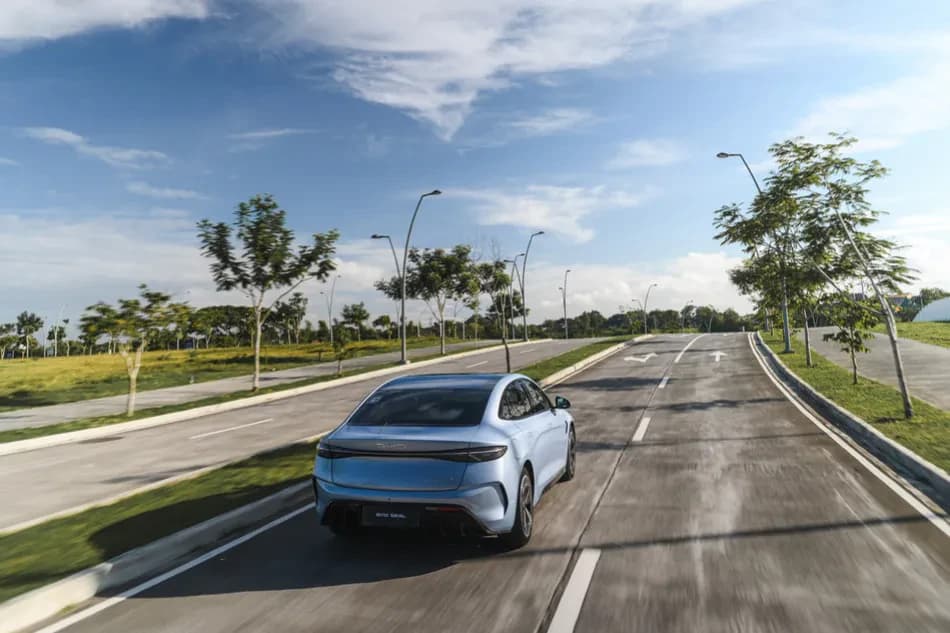
Updated DOE guidelines and classifications
What category does your new energy vehicle (NEV) fall under?
Here are the amended Department of Energy (DOE) guidelines for EVs—for if you want to delve deeper into how the Philippines classifies the many types of EVs you will encounter on local roads
There are now six classifications of electric vehicles (EVs) in the Philippines—up from the previous four—based on the amended Department of Energy (DOE) guidelines.
According to DOE Department Circular (DC) No. DC2025-09-0015, which is an amendment of the DC No. 2023-05-0012 and published on its website on last September 2025, EV classifications are namely:
Battery EVs (BEVs), or those with a traction battery as power source, including the pure electric vehicles.
Hybrid EVs (HEVs), or those with both rechargeable energy storage system (RESS) and a fueled power source, and have tailpipe emissions.
Light EVs (LEVs), or those used in micromobility such as electric scooters, electric bicycles or those that weigh less than 50kg.
Plug-in Hybrid EVs (PHEVs), or the HEVs with RESS that can be charged from an external energy source and have tailpipe emissions.
Range Extender/d EVs (REEVs), or the HEVs propelled by an electric motor only with a fueled power source specifically used for charging the RESS; and
Fuel Cell EVs (FCEVs), or those with no tailpipe emissions that use a fuel cell to generate power.
Previously, EVs were only classified as BEVs, HEVs, LEVs, and PHEVs. Does this help clear things up?
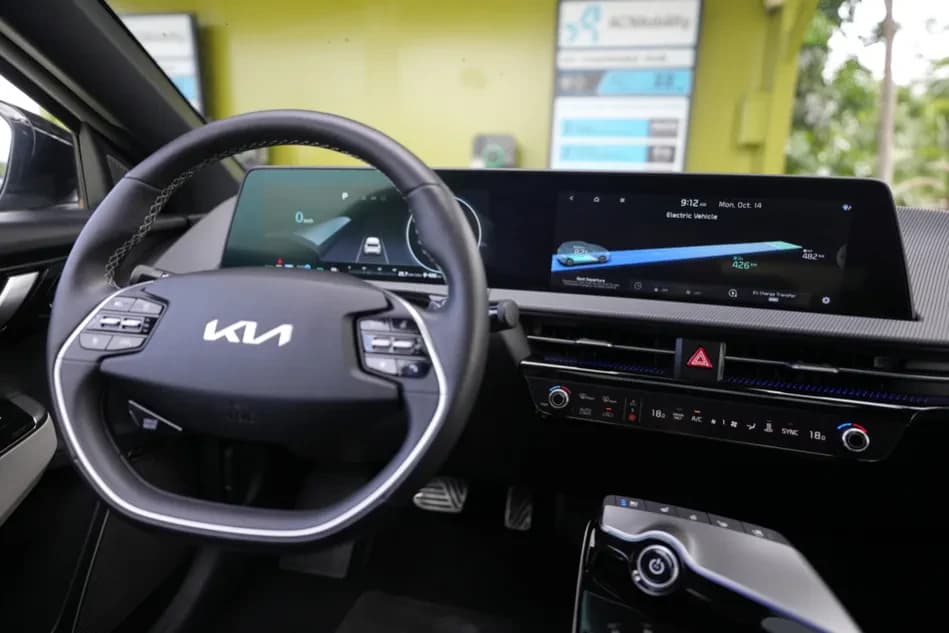
EV Battery Myth cost
Why does this myth surrounding EV batteries still persist?
This topic often comes up during conversations about EVs.
“EV batteries do not last and will need to be replaced in 3 years, and the cost is as much as a car.”
The truth of the matter is that Electric vehicles (EVs) have come a long way in recent years. While battery costs were once a major barrier to widespread EV adoption, the reality today tells a different story.
In the early 2010s, older EV models did indeed carry high battery costs, which influenced purchasing costs and public perception. Additionally, the media often focuses on rare battery replacement cases.
However, it’s important to note that current EV batteries are designed to last 10–15 years and will most likely outlast the vehicle itself.
EV manufacturers are also investing in battery recycling and second-life applications, which help extend battery value and reduce environmental impact. In Japan, for example, batteries from old hybrids are reused to store electricity from wind turbines or used as backup storage for solar-powered homes,
Consumers should be aware that while the initial purchase price of some EVs can still be higher than comparable gas cars, the total cost of ownership—including fuel savings and lower maintenance—can make EVs a more economical choice over time.
The idea that EV batteries are still prohibitively expensive is outdated. Thanks to advances in technology, battery costs are falling steadily, and their reliability has improved in leaps and bounds. BYD’s blade battery is proof of that. And if ever there is any doubt, BYD backs up its claims. All vehicles sold by BYD in the Philippines are covered by a 6-year, or 150,000-kilometer vehicle Warranty, an 8-year, or 160,000-kilometer Blade Battery warranty, and an 8-year, or 150,000-kilometer electric motor warranty. For Kia, you are coveted by a 5-year or 160,000 kilometers vehicle warranty, while the EV high-voltage battery has an 8-year or 160,000 kilometers warranty.

What is the ACMobility Philippine EV Spine?
The ACMobility Philippine EV Spine
EV travel for the entire Philippines—from Pagudpud and Pagadian and beyond—is possible thanks to ACMobility
Since 2023, the Ayala Group has been investing in the development of electric vehicle charging stations to create a sustainable ecosystem as the Philippines transitions to electrified mobility. ACMobility manages multiple EV charging hubs primarily located in Luzon, and with a growing presence in Visayas and Mindanao. As ACMobility's charging network expands nationwide, the company is also developing digital platforms like Evro that will allow individuals and businesses to easily access charging infrastructure and service centers across the country.
What is the Philippine EV Spine?
The “Philippine EV Spine” network is ACMobility’s nationwide initiative to build a fast‑charging backbone for electric vehicles (EVs) across the Philippines. At its heart are AC and DC charging points in strategic locations, all aimed at making EV travel from Pagudpud to Pagadian possible.
The network is already operating in more than 100 locations nationwide. Pagudpud in Ilocos Norte has become its northernmost link. And more charging hub locations are expected to come online month by month.
The Philippine EV Spine is essentially ACMobility’s nationwide charging network strategy — designed to make long-distance EV travel across the country possible and worry-free.
Here’s a clear breakdown:
1. Enable Seamless Long-Distance EV Travel
The EV Spine connects key cities and regions from north (Pagudpud) to south (Pagadian) through strategically located AC and DC charging stations. This makes it possible for EV drivers to confidently travel long distances without worrying about running out of charge — effectively eliminating range anxiety. ACMobility’s network gives EV drivers confidence to travel beyond city limits.
2. Build the Backbone of EV Adoption in the Country
Just like highways support cars, the EV Spine is the backbone for EV growth. It ensures infrastructure is in place ahead of mass EV adoption, encouraging both individuals and businesses to shift to electric.
3. Support the Country’s Sustainability Goals
By making EV travel practical nationwide, the EV Spine helps reduce transport emissions—one of the largest sources of carbon pollution in the Philippines. Many hubs are also powered by renewable energy, making the network both clean and future-ready.
4. Create a Nationwide Partner Ecosystem
The Spine links malls, retail chains, property developers, OEMs, and energy companies through ACMobility’s interoperable charging network and the Evro app.
5. Promote EV Tourism and Economic Activity
By placing chargers in strategic sites, the Spine opens up new travel corridors for EV owners. This supports local businesses, tourism, and regional connectivity.
The Philippine EV Spine is ACMobility’s nationwide network that connects the country through smart, reliable, renewable-powered EV charging—so drivers can travel confidently from end to end.
About ACMobility
ACMobility is part of the Ayala Group of Companies and the country's first end-to-end mobility provider. Aside from operating the largest dealer network of Isuzu, ACMobility is the official distributor of Kia, and BYD passenger cars in the Philippines. ACMobility is also the master franchisor of the Bosch Car Service automotive workshop network, which offers “one-stop-shop" services for mechanical issues, vehicle diagnostics, and intricate electronics related to engine and safety systems.
About Evro
Evro is a leading software solutions provider and a proud partner of the Ayala Group, dedicated to delivering seamless and customer-friendly electric vehicle (EV) experiences across the Philippines. Through its innovative app, Evro offers real-time information on charging station locations, availability, and functionality, simplifying the EV charging process for users. The app enables EV owners to locate, reserve, and manage charging sessions via a unified platform that connects all major charge point operators in the country.
Committed to driving EV adoption, Evro also supports businesses in setting up and managing charging stations with ease, fostering a connected and sustainable charging ecosystem. The Evro app is available for download on the App Store and Google Play, ensuring easy access for EV users nationwide.
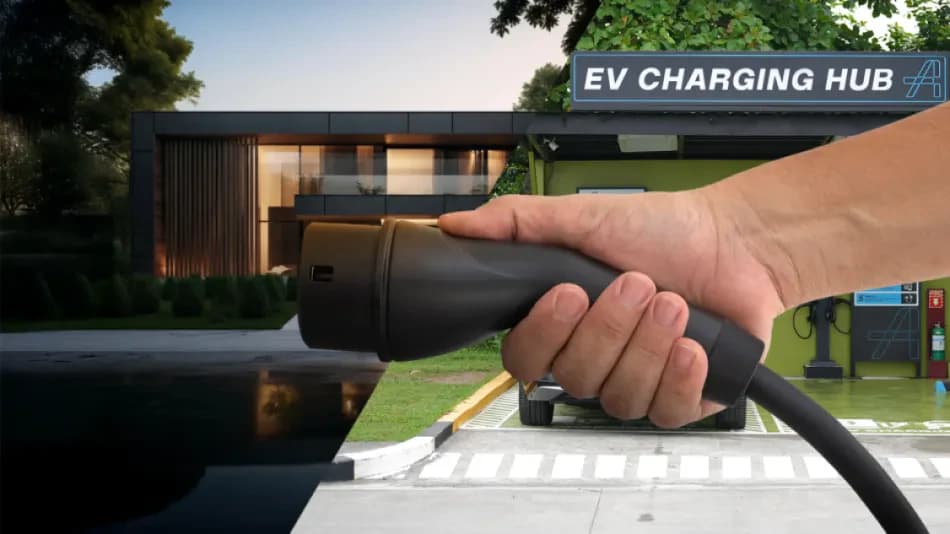
Charging: When to charge at Home vs Public Stations
Charging at Home and Charging at an ACMobility EV Charging Hub
Both methods work together to form a flexible and comprehensive EV charging ecosystem
As electric vehicles (EVs) continue to gain popularity, one of the major lifestyle changes for EV owners is how and where they “fuel” their cars. Unlike gas-powered vehicles that rely on filling stations, EVs offer the convenience of home charging. While public charging stations are essential for long trips and on-the-go top-ups, charging at home provides a range of unique benefits that make it the preferred choice for many EV owners.
1. Convenience and Time Savings
One of the most significant advantages of home charging is convenience. Instead of driving to a charging station and waiting for a session to complete, you can simply plug in your car at night and wake up to a full battery in the morning. This is especially useful for those with regular daily commutes, as it eliminates the need to make extra stops during the day. Charging becomes part of your routine—just like charging a phone. For even faster AC charging at home, Greenstrum is here to cater to all of your home charger installation needs.
2. Cost Efficiency
Charging at home is usually cheaper than using public stations. In contrast, public fast chargers often come with premium pricing for the convenience and speed they offer. It really depends on the situation you find yourself in.
3. Greater Control and Flexibility
When you charge at home, you have full control over your charging schedule and don’t need to rely on station availability. Public chargers, especially in busy areas, can sometimes be occupied. Home charging offers uninterrupted access, giving you more flexibility and peace of mind.
So, when do you use public EV Charging stations?
Despite the many benefits of home charging, there are times when public charging stations are the best or only option. One of the most common scenarios is during long-distance travel. If your destination is beyond your EV’s range, fast charging along the route becomes necessary to continue the journey with minimal delays. ACMobility has created the Philippine EV Charging Spine for specifically this purpose. Learn more about it here.
Public stations are also ideal for urban dwellers who may not have access to a private driveway or garage. In apartment buildings or dense city areas, public charging infrastructure provides the access needed to keep an EV running reliably. There is a growing number of ACMobility EV charging locations that are being opened nationwide. For their locations and more information click
Additionally, DC fast charging stations are useful for quick top-ups when you’re short on time or didn’t have a chance to charge at home. This is especially important for rideshare drivers, delivery vehicles, or fleet operators who need to maximize uptime.
While public charging stations are essential for road trips, fast top-ups, and urban use, home charging remains a practical and cost-effective method. Meanwhile,, ACMobility charging stations ensure EV drivers can travel confidently beyond their local range or stay charged without access to home infrastructure. Together, they form a flexible and comprehensive EV charging ecosystem.
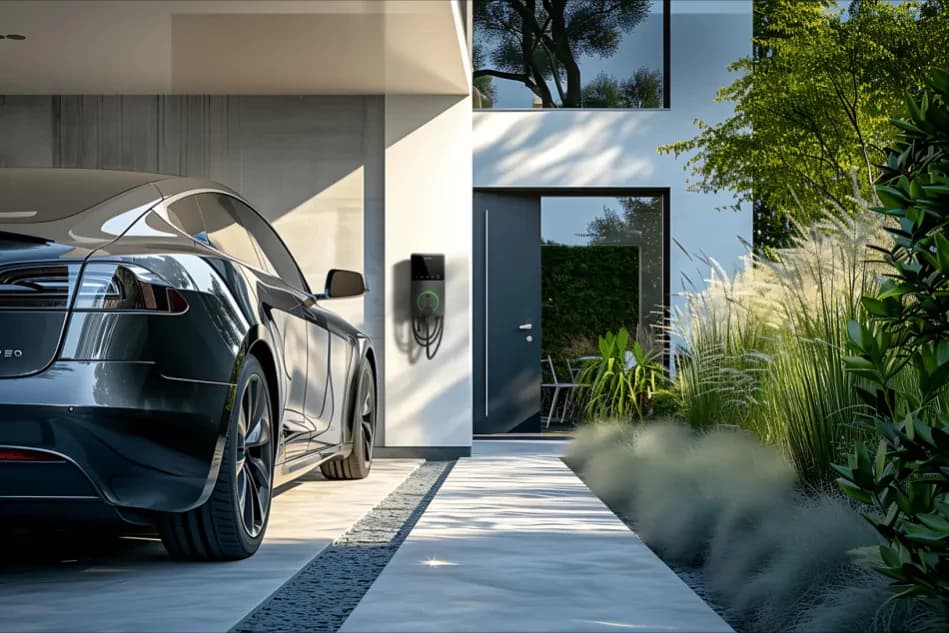
Home charging made easy with Greenstrum
Need to install a faster AC charger at home? Greenstrum is at your service.
ACMobility’s commitment to building safe and reliable EV charging infrastructure nationwide is made possible through its strong partnership with Greenstrum, a leader in customized EV charging solutions for private, commercial, and industrial use.
A subsidiary of ACMobility, Greenstrum handles the procurement, installation, and maintenance of AC and DC chargers nationwide. To ensure safety and operational efficiency, all charging installations are professionally executed, regularly inspected, and supported with ongoing maintenance as needed.
As electric vehicles (EVs) become more popular, many drivers are choosing to install EV chargers at home for convenience and long-term cost savings—and Greenstrum is here to help.
Why Install a Home EV Charger?
Installing an EV charger at home allows you to recharge your vehicle overnight, ensuring it’s ready to go each morning. This makes charging a seamless part of daily routines and reduces reliance on public charging for everyday driving—ideal for most EV owners.
Choosing the Right Home Charger
The process typically begins with selecting the appropriate charger. Most EV owners opt for a Level 2 AC charger, which is commonly rated at around 7 kW and provides significantly faster charging than the standard Level 1 charger that comes with most vehicles.
A 7 kW charger is a form of Level 2 charging and is widely used for residential installations because it works well with typical single-phase household power while offering a good balance between charging speed and electrical load. At this power level, most EVs can be conveniently charged overnight.
Level 2 chargers require a dedicated 230-volt power supply connected directly to a circuit breaker—similar to how split-type air-conditioning units are installed. Actual charging speed may vary depending on the vehicle’s onboard charging capability.
Safe, Professional Installation
Because a home EV charger is often one of the largest electrical loads in a household, proper installation is critical. Before installation, licensed Greenstrum electricians inspect your home’s electrical panel to ensure it can safely support the additional load. If necessary, upgrades to the panel or circuit breakers may be recommended.
Once confirmed, the team installs dedicated cabling, an additional circuit breaker, and securely mounts the charger—typically in a garage or driveway—ensuring compliance with safety standards and best practices.
Did You Know?
A 7 kW EV wall charger draws roughly the same electrical load as running about four (4) 2-horsepower air-conditioning units at the same time.
Because of this high power demand, EV chargers require a dedicated circuit breaker and sufficient electrical capacity to ensure safe and reliable home charging.
Professional installation helps keep your home safe, preventing overheating, tripped breakers, and electrical hazards—while also protecting your EV.
Smart Charging, Greater Control
Smart EV chargers are increasingly popular, offering features such as scheduled charging, energy monitoring, and remote access through mobile apps. These features help optimize charging times, manage household energy use more efficiently, and further improve everyday convenience.
Warranty, Support, and Peace of Mind
Installation costs vary depending on each household’s specific requirements. To get started, homeowners can contact Greenstrum to schedule an onsite assessment. If electrical upgrades are required, these are completed before the charger is installed, tested, and activated.
For added confidence, Greenstrum provides a 2-year warranty on its home charger installations, along with post-installation support for maintenance and troubleshooting—ensuring a safe, reliable, and worry-free home charging experience.
Get Started
Contact Greenstrum through https://greenstrum.com or at +63 917 140 4242 or through the ACMobility Helpline at +63 2 7777 2266 to begin faster, safer EV charging at home.
The early history of the Electric Vehicle
Did you know that
EV technology is not new. In fact, it even predates the modern internal combustion engine (ICE) as a form of propulsion. Car enthusiasts who are familiar with automotive history would know this, but for those curious, a visit to Jay Leno’s Garage on YouTube is an excellent resource. A few of these early electric cars still survive today and are maintained by Leno. Amazing how EV technology is almost as old as the car itself.
The history of the electric car spans a relatively brief time period and includes early innovation, periods of decline, and a major resurgence in the 21st century. ACMobility has embraced this latest shift to green motoring, and not only sells the world’s most innovative and modern EVs, but also continues to expand the nationwide EV charging network to support motorists who have chosen to go electric.
Here's a concise overview of the history of the EV:
Early History (1830s–1900s)
1830s–1840s: Inventors in Hungary, the Netherlands, and the U.S. developed early prototypes of small-scale electric vehicles (EVs), using non-rechargeable batteries.
1859: The invention of the rechargeable lead-acid battery by Gaston Planté made electric transport more practical.
1880s–1890s: Innovators like Thomas Parker in the UK and William Morrison in the U.S. built more functional electric vehicles. By the 1890s, electric taxis and passenger vehicles became common in cities like New York and London.
Golden Age (1900–1912)
By this time electric cars were more popular than gasoline or steam-powered vehicles. They were quiet, easy to drive, and didn’t emit pollutants.
But it was an electric component that propelled gasoline powered vehicles to popularity. With the arrival of the electric starter, gasoline-powered vehicles did not need to be cranked by hand to start them.
Decline (1910s–1930s)
After the invention of the electric starter which made gas-powered cars easier to use, mass production of gasoline vehicles (notably Ford’s Model T) drove down costs. Gasoline also became cheap and widely available, while electric vehicles suffered from limited range and poor infrastructure. By the 1930s, EVs had nearly disappeared from the market.
Dormancy and Limited Use (1930s–1980s)
EVs survived in niche markets—like milk floats in the UK or industrial carts. The 1970s oil crisis renewed brief interest in EVs, but battery and performance limitations stalled broader adoption.
Renewed Interest (1990s)
Environmental concerns and environmental regulations in California led automakers to revisit EVs. Notable models to make an appearance during this time were the GM EV1 (1996)—leased to a small number of users but later controversially recalled and crushed—and the Toyota RAV4 EV, Honda EV Plus.
Modern Era and Mass Adoption (2000s–Present)
In 2008 Tesla Motors released the Tesla Roadster, the first highway-legal electric car with lithium-ion battery range over 200 miles. This revolutionized public perception of EVs.
In 2010 The Nissan Leaf became the first mass-market electric car. Governments worldwide began offering subsidies, building charging infrastructure, and setting emission targets. Legacy automakers (like GM, Ford, and VW) entered the market with new EV models. Technological improvements, especially in battery tech, helped reduce cost and increase range.
Present Day (2020s)
Electric cars have entered the mainstream. Major brands (Hyundai, BMW, Rivian, and Lucid) are growing fast, but BYD is the current leader. Global EV sales have surpassed 10 million units in 2023, and some countries like Norway have set dates to end new ICE vehicle sales in the not too far future. Infrastructure is expanding rapidly, especially in the Philippines, thanks to ACMobility.

Side by side comparison: AC vs DC Charging
Understanding AC and DC Charging: Key Differences and When to Use Each
As electric vehicles (EVs) gain momentum in the global shift toward sustainable transportation, understanding how they charge is essential—especially the distinction between AC (Alternating Current) and DC (Direct Current) charging. Each serves a different purpose and offers unique advantages depending on the situation.
What’s the Difference Between AC and DC Charging?
The core difference between AC and DC charging lies in how electricity is delivered and processed. The power grid supplies electricity in the form of AC, which is compatible with most residential and commercial power sources. However, EV batteries can only store energy in DC form.
In AC charging, the EV’s onboard charger converts AC power into DC before storing it in the battery. This process is relatively slow and limited by the power capacity of the onboard charger, usually between 3.6 kW and 22 kW.
In contrast, DC charging bypasses the onboard converter entirely by supplying DC power directly to the battery via a high-powered external charger. This allows for much faster charging, often delivering between 50 kW and 350 kW, depending on the vehicle and station.
ACMobility recently launched its new charging stations which are also complemented with the introduction of SuperFast and UltraFast Chargers. Both chargers have the capability of charging up to 480kW, which will help significantly enhance the EV ownership and charging experience for more Filipinos nationwide.
Advantages of AC Charging
Ideal for Extended Parking
AC charging works best where vehicles naturally stay parked for longer periods—at home, at work, or while staying overnight. With a Level 2 AC charger, most EVs can fully recharge within 6 to 12 hours, making charging a seamless part of daily routines.
More Accessible and Cost-Efficient
AC chargers are generally more affordable to install and maintain. They can often be supported by existing electrical infrastructure, avoiding the need for extensive upgrades. This makes AC charging a practical solution for residential, workplace, and destination charging.
Advantages of DC Charging
Fast Charging for Long-Distance Travel
DC charging is designed for situations where speed matters—such as road trips or time-sensitive stops. Many EVs can recharge up to 80% in 20 to 60 minutes using a DC fast charger, significantly reducing downtime while traveling.
Built for Public and High-Traffic Locations
DC chargers are typically deployed in public, high-traffic areas like highway service stops, shopping centers, and transit hubs. This enables quicker vehicle turnover and supports drivers who rely on public charging rather than home setups.
Which Should You Use?
Use AC charging when time is on your side—such as overnight or during work hours.
Use DC charging when you’re on the move and need quick power, especially on long trips.
Together, AC and DC charging options form a complementary ecosystem, ensuring EV drivers have flexible, efficient, and reliable ways to stay charged—no matter the journey. ACMobility is proud to provide both, and at a growing number of convenient locations nationwide.

How your life will change when switching to EV
How Your Life Will Change When You Switch from an ICE Vehicle to an EV
The transition from an internal combustion engine (ICE) vehicle to an electric vehicle (EV) is more than a swap under the hood—it's a lifestyle shift that touches how you drive, fuel, maintain, and even think about transportation. Whether you’re motivated by environmental concerns, rising gas prices, or cutting-edge technology, switching to an EV can bring a series of noticeable changes to your daily routine and long-term habits.
1. Say Goodbye to the fuel pump
One of the most immediate changes is how you refuel—or rather, recharge. Instead of visiting gas stations weekly, most EV drivers plug in their vehicles at home overnight. Imagine waking up each day to a fully "tanked" car, like your smartphone. While long trips may still require charging stops, apps and growing infrastructure make planning easier than ever.
Lifestyle change: Fueling becomes a passive task, saving time and eliminating spontaneous gas station runs.
2. Lower Operating Costs
EVs are significantly cheaper to run. Electricity generally costs less than gasoline per mile, and you can often take advantage of off-peak electricity rates. Plus, with fewer moving parts—no oil changes, spark plugs, or exhaust systems—EV maintenance is simpler and cheaper over time.
Lifestyle change: Expect fewer mechanic visits and more predictable monthly expenses.
3. Quiet and Smooth driving
Driving an EV is a noticeably quieter experience. Without the rumble of an engine or gear shifts, the ride is smooth, silent, and refined. This not only enhances comfort but reduces noise pollution in neighborhoods and cities.
Lifestyle change: Your daily commute becomes a calmer, more relaxing experience.
4. More Mindful Trip Planning
While EV range has dramatically improved (many offer 250km or more per charge), you may still find yourself planning trips more thoughtfully, especially in rural areas with sparse charging options. Charging takes longer than pumping gas, so you’ll learn to combine errands or optimize routes.
Lifestyle change: A bit more forethought goes into longer journeys, but many drivers find this a helpful habit, not a hassle. Driving the whole length of the Philippines is also possible because of ACMobility's EV Charging Spine.
5. Tech-Enhanced Driving
EVs are typically packed with technology. Expect large touchscreens, over-the-air updates, advanced driver-assistance systems, and smart apps that let you pre-cool the cabin or check charge status remotely.
Lifestyle change: Your car becomes more like a smart device, blending seamlessly into a digital lifestyle.
6. Environmental Peace of Mind
Perhaps the most profound change is psychological. Driving an EV reduces your carbon footprint, especially if your electricity comes from renewable sources. You’re contributing to cleaner air and a more sustainable future.
Lifestyle change: Many drivers feel a greater sense of environmental responsibility and pride.
7. Charging Culture and Community
From workplace chargers to EV-only parking spots and online driver groups, a new community forms around your EV experience. There's a growing culture of sharing charging tips, road trip routes, and the latest EV news. The PH EV users group is a wonderful resource
Lifestyle change: You might find yourself more connected with like-minded, sustainability-conscious drivers.
Switching from an ICE vehicle to an EV isn’t just a mechanical change—it’s a holistic upgrade to how you interact with your car, your time, and the environment. While there’s an initial learning curve, most drivers find the transition intuitive, rewarding, and even exciting. It’s not just about what you’re driving—it’s about how your life evolves around it.