
Charging Basics
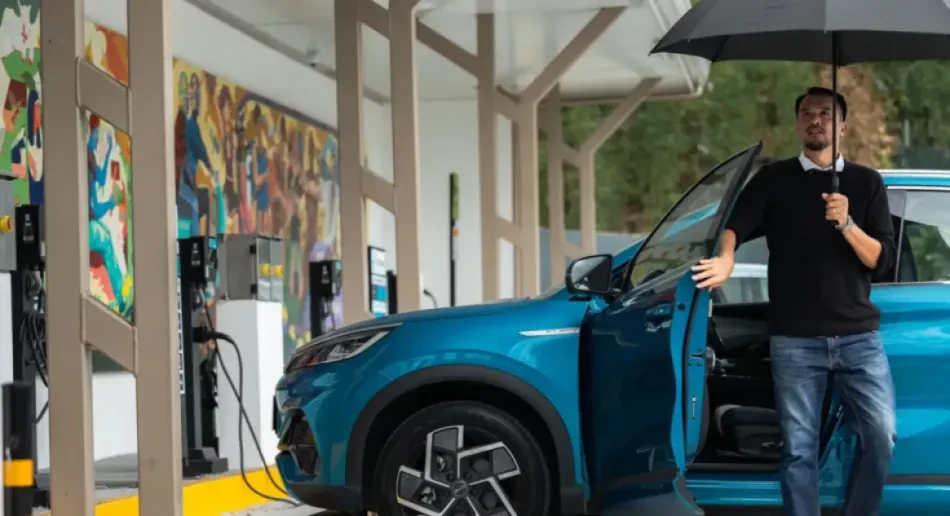
EV Safety 101: How to Charge Your Vehicle Without The Worry, Rain or Shine
Taguig City, Philippines - Weather in the Philippines has become increasingly unpredictable. Weeks can quickly shift from scorching heat to days of continuous rain. These sudden changes present challenges to car owners, especially those with electric vehicles (EVs). One common concern is the safety of EV charging during extreme weather, particularly in heavy rain, floods, or high heat.
To help EV owners stay safe and powered up no matter the weather, ACMobility, a leading provider of EV charging solutions and infrastructure in the Philippines, shares a few essential tips for charging smartly and safely during periods of extreme heat or heavy rain.
1. Check Charging Station Availability and Status First
When the weather swings from scorching heat to sudden downpours, being prepared makes all the difference. Before heading out, EV owners are encouraged to first check the availability of charging stations in their area. This can be easily done through e-mobility platforms such as the Evro app, which features a Station Finder that shows all 240+ Department of Energy (DOE)-registered public charging stations nationwide. Apart from locating the nearest charging station, Evro also lets EV drivers check the status of each station in real time, manage their sessions, and process their payments, all in one app — helping them plan their trips with more ease and confidence.
2. Know Your Car’s Charging Guidelines and Condition
Similar to conventional Internal Combustion Engine (ICE) vehicles, it is essential for EV owners to check their vehicle manual for proper procedures, equipment compatibility, and emergency features, especially before charging. Brushing up on these basics could help save drivers from unnecessary risks, especially during unpredictable weather. Likewise, EV owners are encouraged to avoid charging in flooded areas as such may increase safety risks and affect vehicle performance. These precautions help ensure both safety and the longevity of the vehicle.
Likewise, it is also a must to check the condition of one's vehicle if it has been exposed to deep floodwaters before charging. Users are advised to check for signs of water entry in the charging port, undercarriage, or cabin, particularly if floodwaters may have reached the level of the charging port, and monitor for any battery warning lights.
Extreme heat is another factor to be mindful of. After long drives or use under intense heat, it is best to let the EV cool down and check its condition before charging. This prevents unnecessary strain on the battery, which, like a gas-powered engine, performs best when properly managed.
If anything feels unusual, whether due to rain or extreme heat, the safest option is to have the EV inspected at an authorized technician or service center before charging.
3. Use The Right Charger for Your Vehicle
EV owners should always ensure that the charger and plug match their vehicle’s specifications. The use of adapters or extension cords is strictly not allowed, as these can cause overheating, damage both the EV and the charger, or become fire hazards.
Universally, there are two main types of EV chargers: AC (alternating current) and DC (direct current). AC chargers, which provide up to 22 kW of power, are the ones most widely available through the ACMobility network. For EVs equipped with faster on-board chargers, they can deliver a full charge in about three to four hours. For other vehicles, charging from 20% to 80% typically takes up to eight hours, depending on the battery size and conditions. Meanwhile, ACMobility’s DC chargers deliver 60kW, 120kW, 240 kW and 480 kW of power, and can charge an EV from 20% to 80% in just 20 to 60 minutes. The 60 kW and 120 kW units are referred to as Fast Chargers and are available in multiple locations nationwide, while the 240 kW SuperFast and 480 kW UltraFast chargers are currently available at the Corinthian Carpark in Makati. Each charger type uses different connectors. ACMobility’s AC chargers support Mennekes (Type 2), and GB/T connectors; while its DC fast chargers support CCS2 connectors.
If EV owners are unsure of connector compatibility, they can simply register their vehicles through the Evro app. The app will automatically display the compatible connectors and identify charging stations equipped with the appropriate chargers for their specific vehicle.
4. Park and Set Up Safely
EV owners are encouraged to position their vehicles properly and check their surroundings before charging. While ACMobility charging stations are built with proper grounding and level surfaces, drivers should still take care when parking to ensure easy access to the charger. Before plugging in, it is important to inspect the charging station for any visible damage, signs of vandalism, or anything unusual and any issues should be reported right away. When setting up, care should be taken to avoid stretching the charging cable across walkways, especially in wet or slippery conditions, to prevent accidents or wear. Once everything is securely in place, charging can begin safely.
5. If Something Feels Off While Charging, Step Back and Stay Safe
If something goes wrong while charging, such as sparks, unusual sounds, or system errors, do not touch or forcefully unplug the charger. Use the Evro app to safely end the session if possible and move away from the vehicle. Report the issue to the station’s support team or emergency services. Once safe, ensure the power source is switched off before any further action.
Engineered For Safety Together With Our Partners
Apart from Evro, ACMobility’s commitment to building safe and reliable charging stations nationwide is made possible through its strong partnership with Greenstrum, a leader in customized EV charging solutions for private, commercial, and industrial use. A subsidiary of ACMobility, Greenstrum handles the procurement, installation, and maintenance of both AC and DC chargers across the country. To ensure safety and efficiency, charging stations are inspected and maintained at least twice a year, with additional checks conducted as needed.
ACMobility’s charging stations are carefully designed with safety in mind and follow the standards set by the Department of Energy (DOE), Department of Trade and Industry (DTI), and international guidelines. The company also works closely with Evro, Greenstrum, and its site partners to ensure that every station is safe, well-maintained, and fully operational. While ACMobility’s EV infrastructure is built for all-weather performance, EV owners are encouraged to exercise caution, especially during periods of extreme heat or heavy rain.
For any questions on how to use the Evro app, users may reach out through Evro’s in-app messaging service. For emergencies or immediate assistance at any ACMobility charging station, please call the ACMobility Helpline at (02) 7777-ACMo (2266).
For those interested in establishing an ACMobility charging station or exploring partnership opportunities, visit https://acmobility.ph/.

What is the ACMobility Philippine EV Spine?
The ACMobility Philippine EV Spine
EV travel for the entire Philippines—from Pagudpud and Pagadian and beyond—is possible thanks to ACMobility
Since 2023, the Ayala Group has been investing in the development of electric vehicle charging stations to create a sustainable ecosystem as the Philippines transitions to electrified mobility. ACMobility manages multiple EV charging hubs primarily located in Luzon, and with a growing presence in Visayas and Mindanao. As ACMobility's charging network expands nationwide, the company is also developing digital platforms like Evro that will allow individuals and businesses to easily access charging infrastructure and service centers across the country.
What is the Philippine EV Spine?
The “Philippine EV Spine” network is ACMobility’s nationwide initiative to build a fast‑charging backbone for electric vehicles (EVs) across the Philippines. At its heart are AC and DC charging points in strategic locations, all aimed at making EV travel from Pagudpud to Pagadian possible.
The network is already operating in more than 100 locations nationwide. Pagudpud in Ilocos Norte has become its northernmost link. And more charging hub locations are expected to come online month by month.
The Philippine EV Spine is essentially ACMobility’s nationwide charging network strategy — designed to make long-distance EV travel across the country possible and worry-free.
Here’s a clear breakdown:
1. Enable Seamless Long-Distance EV Travel
The EV Spine connects key cities and regions from north (Pagudpud) to south (Pagadian) through strategically located AC and DC charging stations. This makes it possible for EV drivers to confidently travel long distances without worrying about running out of charge — effectively eliminating range anxiety. ACMobility’s network gives EV drivers confidence to travel beyond city limits.
2. Build the Backbone of EV Adoption in the Country
Just like highways support cars, the EV Spine is the backbone for EV growth. It ensures infrastructure is in place ahead of mass EV adoption, encouraging both individuals and businesses to shift to electric.
3. Support the Country’s Sustainability Goals
By making EV travel practical nationwide, the EV Spine helps reduce transport emissions—one of the largest sources of carbon pollution in the Philippines. Many hubs are also powered by renewable energy, making the network both clean and future-ready.
4. Create a Nationwide Partner Ecosystem
The Spine links malls, retail chains, property developers, OEMs, and energy companies through ACMobility’s interoperable charging network and the Evro app.
5. Promote EV Tourism and Economic Activity
By placing chargers in strategic sites, the Spine opens up new travel corridors for EV owners. This supports local businesses, tourism, and regional connectivity.
The Philippine EV Spine is ACMobility’s nationwide network that connects the country through smart, reliable, renewable-powered EV charging—so drivers can travel confidently from end to end.
About ACMobility
ACMobility is part of the Ayala Group of Companies and the country's first end-to-end mobility provider. Aside from operating the largest dealer network of Isuzu, ACMobility is the official distributor of Kia, and BYD passenger cars in the Philippines. ACMobility is also the master franchisor of the Bosch Car Service automotive workshop network, which offers “one-stop-shop" services for mechanical issues, vehicle diagnostics, and intricate electronics related to engine and safety systems.
About Evro
Evro is a leading software solutions provider and a proud partner of the Ayala Group, dedicated to delivering seamless and customer-friendly electric vehicle (EV) experiences across the Philippines. Through its innovative app, Evro offers real-time information on charging station locations, availability, and functionality, simplifying the EV charging process for users. The app enables EV owners to locate, reserve, and manage charging sessions via a unified platform that connects all major charge point operators in the country.
Committed to driving EV adoption, Evro also supports businesses in setting up and managing charging stations with ease, fostering a connected and sustainable charging ecosystem. The Evro app is available for download on the App Store and Google Play, ensuring easy access for EV users nationwide.
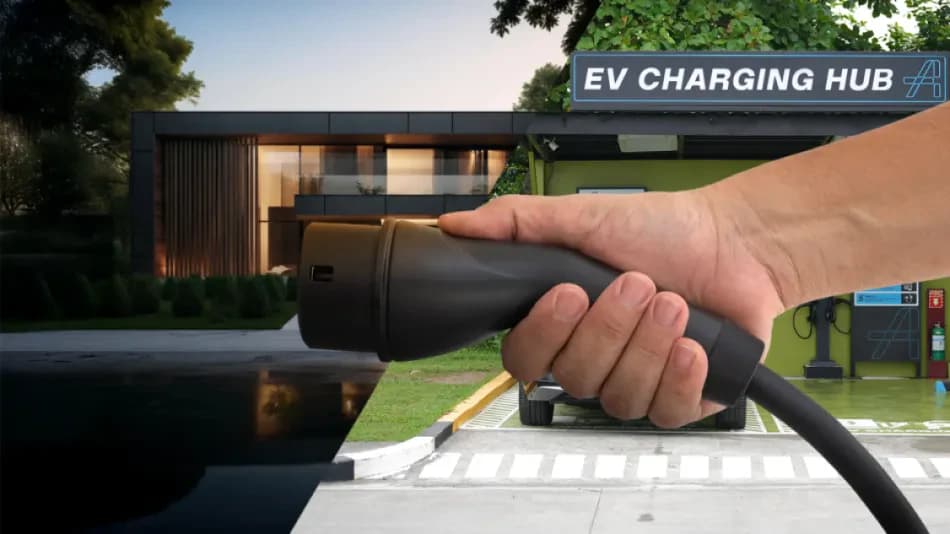
Charging: When to charge at Home vs Public Stations
Charging at Home and Charging at an ACMobility EV Charging Hub
Both methods work together to form a flexible and comprehensive EV charging ecosystem
As electric vehicles (EVs) continue to gain popularity, one of the major lifestyle changes for EV owners is how and where they “fuel” their cars. Unlike gas-powered vehicles that rely on filling stations, EVs offer the convenience of home charging. While public charging stations are essential for long trips and on-the-go top-ups, charging at home provides a range of unique benefits that make it the preferred choice for many EV owners.
1. Convenience and Time Savings
One of the most significant advantages of home charging is convenience. Instead of driving to a charging station and waiting for a session to complete, you can simply plug in your car at night and wake up to a full battery in the morning. This is especially useful for those with regular daily commutes, as it eliminates the need to make extra stops during the day. Charging becomes part of your routine—just like charging a phone. For even faster AC charging at home, Greenstrum is here to cater to all of your home charger installation needs.
2. Cost Efficiency
Charging at home is usually cheaper than using public stations. In contrast, public fast chargers often come with premium pricing for the convenience and speed they offer. It really depends on the situation you find yourself in.
3. Greater Control and Flexibility
When you charge at home, you have full control over your charging schedule and don’t need to rely on station availability. Public chargers, especially in busy areas, can sometimes be occupied. Home charging offers uninterrupted access, giving you more flexibility and peace of mind.
So, when do you use public EV Charging stations?
Despite the many benefits of home charging, there are times when public charging stations are the best or only option. One of the most common scenarios is during long-distance travel. If your destination is beyond your EV’s range, fast charging along the route becomes necessary to continue the journey with minimal delays. ACMobility has created the Philippine EV Charging Spine for specifically this purpose. Learn more about it here.
Public stations are also ideal for urban dwellers who may not have access to a private driveway or garage. In apartment buildings or dense city areas, public charging infrastructure provides the access needed to keep an EV running reliably. There is a growing number of ACMobility EV charging locations that are being opened nationwide. For their locations and more information click
Additionally, DC fast charging stations are useful for quick top-ups when you’re short on time or didn’t have a chance to charge at home. This is especially important for rideshare drivers, delivery vehicles, or fleet operators who need to maximize uptime.
While public charging stations are essential for road trips, fast top-ups, and urban use, home charging remains a practical and cost-effective method. Meanwhile,, ACMobility charging stations ensure EV drivers can travel confidently beyond their local range or stay charged without access to home infrastructure. Together, they form a flexible and comprehensive EV charging ecosystem.
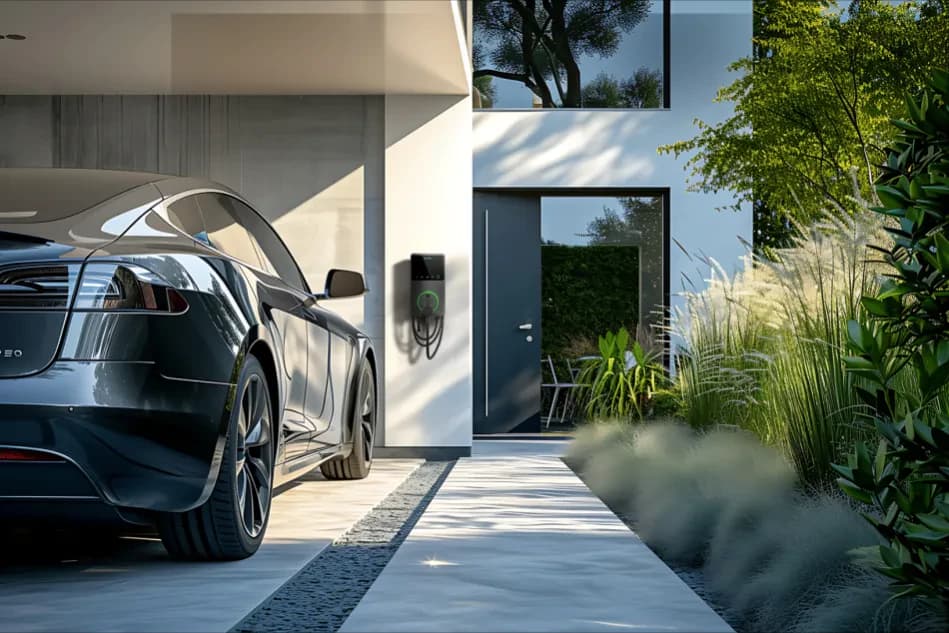
Home charging made easy with Greenstrum
Need to install a faster AC charger at home? Greenstrum is at your service.
ACMobility’s commitment to building safe and reliable EV charging infrastructure nationwide is made possible through its strong partnership with Greenstrum, a leader in customized EV charging solutions for private, commercial, and industrial use.
A subsidiary of ACMobility, Greenstrum handles the procurement, installation, and maintenance of AC and DC chargers nationwide. To ensure safety and operational efficiency, all charging installations are professionally executed, regularly inspected, and supported with ongoing maintenance as needed.
As electric vehicles (EVs) become more popular, many drivers are choosing to install EV chargers at home for convenience and long-term cost savings—and Greenstrum is here to help.
Why Install a Home EV Charger?
Installing an EV charger at home allows you to recharge your vehicle overnight, ensuring it’s ready to go each morning. This makes charging a seamless part of daily routines and reduces reliance on public charging for everyday driving—ideal for most EV owners.
Choosing the Right Home Charger
The process typically begins with selecting the appropriate charger. Most EV owners opt for a Level 2 AC charger, which is commonly rated at around 7 kW and provides significantly faster charging than the standard Level 1 charger that comes with most vehicles.
A 7 kW charger is a form of Level 2 charging and is widely used for residential installations because it works well with typical single-phase household power while offering a good balance between charging speed and electrical load. At this power level, most EVs can be conveniently charged overnight.
Level 2 chargers require a dedicated 230-volt power supply connected directly to a circuit breaker—similar to how split-type air-conditioning units are installed. Actual charging speed may vary depending on the vehicle’s onboard charging capability.
Safe, Professional Installation
Because a home EV charger is often one of the largest electrical loads in a household, proper installation is critical. Before installation, licensed Greenstrum electricians inspect your home’s electrical panel to ensure it can safely support the additional load. If necessary, upgrades to the panel or circuit breakers may be recommended.
Once confirmed, the team installs dedicated cabling, an additional circuit breaker, and securely mounts the charger—typically in a garage or driveway—ensuring compliance with safety standards and best practices.
Did You Know?
A 7 kW EV wall charger draws roughly the same electrical load as running about four (4) 2-horsepower air-conditioning units at the same time.
Because of this high power demand, EV chargers require a dedicated circuit breaker and sufficient electrical capacity to ensure safe and reliable home charging.
Professional installation helps keep your home safe, preventing overheating, tripped breakers, and electrical hazards—while also protecting your EV.
Smart Charging, Greater Control
Smart EV chargers are increasingly popular, offering features such as scheduled charging, energy monitoring, and remote access through mobile apps. These features help optimize charging times, manage household energy use more efficiently, and further improve everyday convenience.
Warranty, Support, and Peace of Mind
Installation costs vary depending on each household’s specific requirements. To get started, homeowners can contact Greenstrum to schedule an onsite assessment. If electrical upgrades are required, these are completed before the charger is installed, tested, and activated.
For added confidence, Greenstrum provides a 2-year warranty on its home charger installations, along with post-installation support for maintenance and troubleshooting—ensuring a safe, reliable, and worry-free home charging experience.
Get Started
Contact Greenstrum through https://greenstrum.com or at +63 917 140 4242 or through the ACMobility Helpline at +63 2 7777 2266 to begin faster, safer EV charging at home.
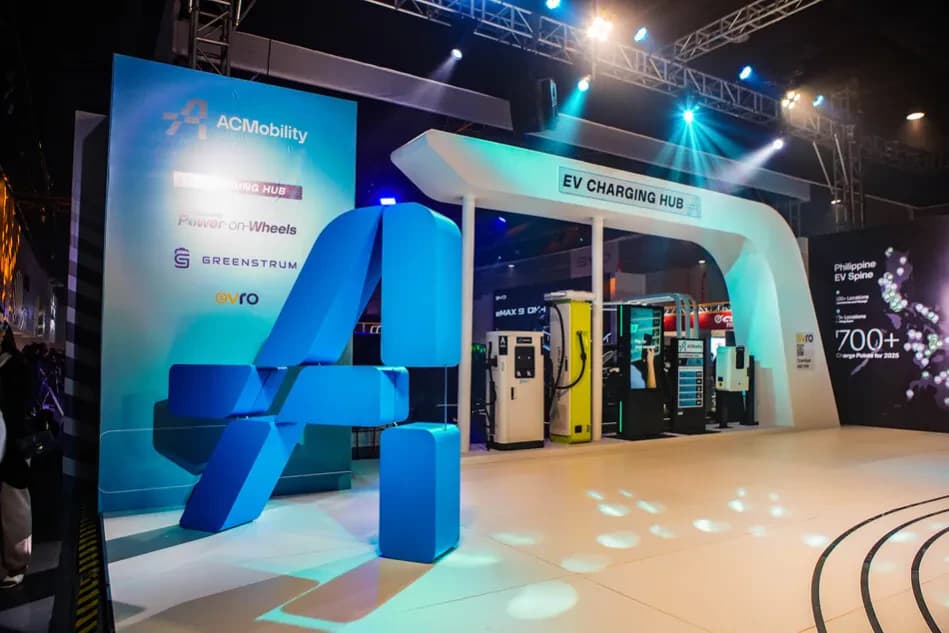
EV Charging Terms
Understanding EV Charging Terminologies: A Beginner’s Guide
Here are the terms you need to know
As electric vehicles (EVs) become increasingly mainstream in the Philippines, so does the language surrounding their use. For new EV owners or those considering making the switch from gas to electric, the terminology used in the world of EV charging can be confusing. Here’s a clear breakdown of the key terms you need to know.
1. AC vs. DC Charging
AC (Alternating Current): Most home chargers and public chargers utilize AC. In a nutshell, the EV’s onboard charger converts AC to DC to store in the battery. Public AC charging is also cheaper than DC charging, and the speed of charging is limited by the vehicle’s on-board charger and battery capacity.
DC (Direct Current) Fast Charging: Found at high-speed charging stations, DC chargers bypass the vehicle’s onboard charger and feed power directly into the battery for much faster charging.
ACMobility offers both AC and DC charging, depending on the charging hub. The Evro app will indicate what kind of charging is available and where.
2. Charging Connectors and Plugs in the Philippines
CCS2 (Combined Charging System): Is a DC fast charging connector that combines a J1772 plug with additional DC pins. This is the standard that is used with most EVs sold in the Philippines today.
TYPE 2/GBT: These are the connectors that are normally used with AC chargers.
In line with DOE guidelines, CCS2 and Type 2 have been standardized as the charging connector types.
4. Charging Rate
Measured in kilowatts (kW), it indicates how fast a charger can deliver power to your vehicle.
Higher kW = faster charging—if the car was built for it.
For example, AC charging flows at a rate of 2kw to 24kW—depending on the vehicle. DC Fast Charging flows at a rate of 50kw—350kW. In fact ACMobility boasts of ultrafast charging at select hubs. At the Corinthians Carpark in Makati, the newest charging station includes four 240 kW SuperFast chargers and one 480 kW UltraFast charger. These can charge compatible EVs in around 10 to 15 minutes, depending on the battery size and condition.
5. State of Charge (SoC)
This is the current battery level, expressed as a percentage. A 60% SoC means the battery is 60% full.
6. Range Anxiety
The concern that an electric vehicle may not have enough battery charge to reach its destination or the next available charging station. In the Philippines, ACMobility addresses this through its rapidly expanding “EV Charging Spine,” a nationwide network of charging stations that enables practical long-distance EV travel across the archipelago.
7. Charger Anxiety
The concern about whether a charging station will be available, working, and compatible when an EV driver needs to recharge. Evro, the all-in-one EV charging app helps reduce this by providing real-time charging station information and visibility, enabling more confident trip planning.
8. Overstaying Fees
Fees charged when an electric vehicle remains plugged in or parked at a charging station after charging is complete, helping ensure charger availability and fair access for other users.
9. Kilowatt-Hour (kWh)
A measure of energy use. Think of it as the EV equivalent of how much fuel is in a gasoline tank. If your EV has a 60 kWh battery, that’s the total energy it can store when full.
10. Evro
Evro, an all-in-one EV charging app and an ACMobility brand, lets you locate, activate, and pay for your charging sessions. It also has the Station Finder feature. This lets users locate all DOE-registered EV charging sites nationwide, helping EV drivers plan and navigate their entire journey easily — all in one app.
You can also monitor real-time availability, track your charging history, and even plan your next drive through features like MyCharge Planner.
11. ACMobility
ACMobility, part of the Ayala Group of Companies, is building the Philippines’ most extensive EV charging infrastructure — from home charging, with Greenstrum home installation, to public charging hubs, mobile charging through Power-on-Wheels (POW), and digital access via the Evro app.
Together, these form an end-to-end EV charging ecosystem. You can learn more about ACMobility here.
Understanding EV charging terms can greatly enhance your experience as an electric vehicle driver. While the world of plugs, kilowatts, and connectors may seem technical at first, a basic familiarity can help you make smarter decisions about your vehicle, charging habits, and travel plans. As infrastructure and technology continue to evolve, knowing this terminology will keep you well-informed and ready for the road ahead.
A primer on DC Charging
Exploring DC Charging and its unique advantages
When charging speed and convenience is essential for EV users
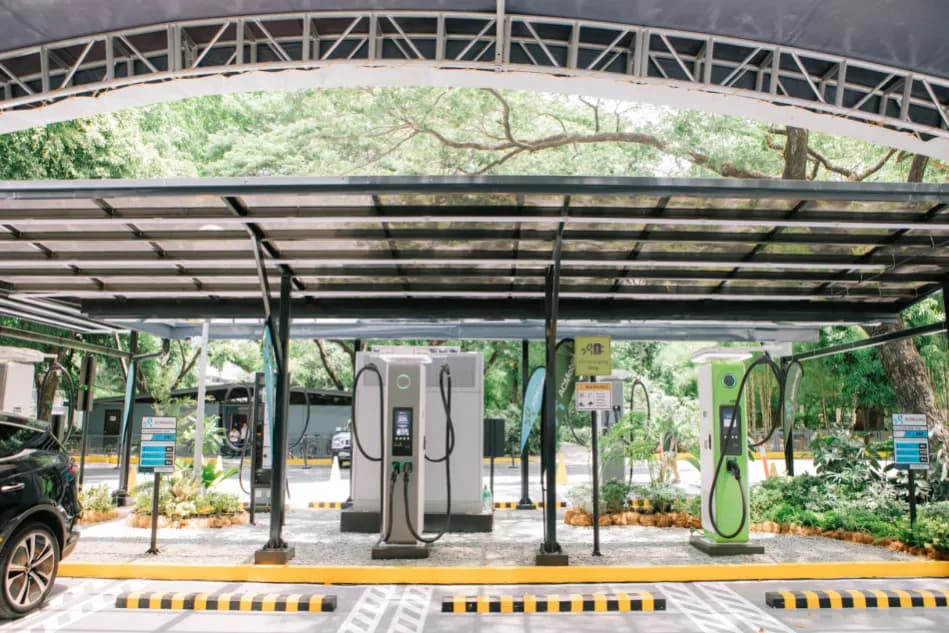
DC (Direct Current) charging, often referred to as fast or rapid charging, is a crucial component of the electric vehicle (EV) ecosystem. Unlike AC charging, where the vehicle converts the alternating current to direct current through an onboard charger, DC charging delivers power directly to the EV battery. This bypasses the vehicle’s onboard converter and allows for significantly faster charging times, making DC charging essential for long-distance travel and high-demand charging needs.
How DC Charging Works
In DC charging, the conversion from AC (from the grid) to DC is done outside the vehicle in the charging station itself. This direct delivery of DC power to the battery allows for much higher power levels—often between 30 kW and 350 kW—resulting in rapid recharging, sometimes in as little as 20–30 minutes depending on the vehicle and charger capabilities. ACMobility is also proud to offer ultra-fast charging in select charging hubs like in Corinthian Carpark in Makati. This station features nine DC CCS2 slots, including four 240 kW chargers (each with dual guns) and one 480 kW UltraFast charger—the fastest in the country. These are capable of charging compatible EVs in as fast as 10 to 15 minutes, depending on the vehicle battery capacity and charging conditions. Equipped with 1000-amp air-cooled cables, the system is engineered for both efficiency and scalability. The site also includes a dedicated pull-through slot to accommodate larger EVs and mini buses, ensuring optimal access and convenience.
These are the Advantages of DC Charging
Speed and Convenience
The most notable advantage of DC charging is its speed. Where a standard Level 2 AC charger might take several hours to fully charge an EV, a DC fast charger can deliver an 80% charge in under an hour. This makes it ideal for drivers on long trips or in urgent need of a quick recharge.
Enables Long-Distance Travel
DC charging stations are strategically placed along highways and in high-traffic areas to support EV drivers traveling beyond their local range. This infrastructure makes EVs more practical for road trips, expanding the usability of electric vehicles beyond urban environments.
Supports High-Usage Fleets
For commercial fleets such as taxis, delivery vehicles, and ride-sharing services, downtime means lost revenue. DC fast charging minimizes vehicle idle time, allowing businesses to keep their electric fleets running efficiently with shorter charging breaks.
Future-Proofing EV Infrastructure
As battery technology evolves and EVs become capable of accepting higher charging rates, DC charging stations will become even more critical. Modern fast chargers can be upgraded to deliver higher power outputs, making them a long-term investment in EV infrastructure.
Boosts EV Adoption
The availability of fast charging helps reduce range anxiety—a common concern among potential EV buyers. Knowing that a vehicle can be quickly recharged en route makes the transition to electric vehicles more appealing.
DC charging plays a vital role in the growth of electric mobility. Its speed, scalability, and ability to support both private and commercial users make it an indispensable tool in the global shift toward cleaner transportation, and ACMobility makes this type of charging option easily available to all EV owners, drivers, and operators.
Power-on-Wheels Primer
Need a boost? Power-on-Wheels is here for you
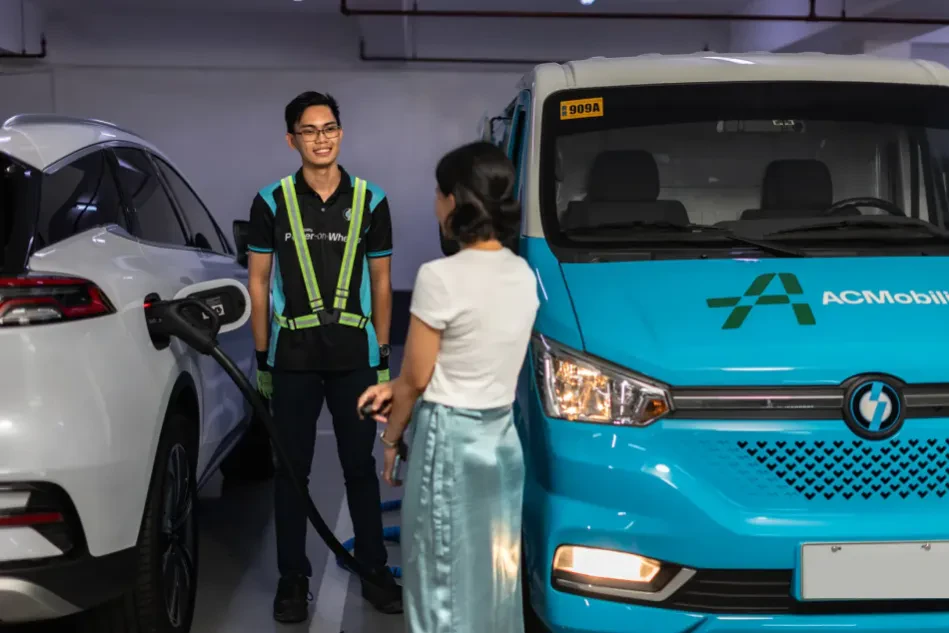
Power-on-Wheels (POW) is a mobile electric vehicle charging station (MEVCS) which allows ACMobility to bring DC fast charging to you, at your convenience.
POW is ACMobility’s innovative mobile EV charging solution launched in March 2025. It offers fast, reliable DC charging delivered directly to the driver's location, making it especially valuable for EV owners without convenient access to fixed charging stations or home charging.
Each POW unit is equipped with a fast DC charger compatible with electric vehicles that use the CCS2 connector. The EV will be charged to a stable capacity, enough to allow the driver to safely continue their journey or reach the nearest fixed charging station.
EV charging sessions can be booked through the Evro app. The POW service further expands ACMobility’s EV charging network by bringing on-demand charging to you.
POW is available as a subscription and as an on-demand service. Customers can choose from a wide range of subscription plans to suit their charging needs and vehicle type. All payments are made via credit card.
POW also offers emergency roadside charging assistance during unforeseen circumstances, further cementing ACMobility’s commitment to convenience, efficiency, and accessibility.
POW offers a range of subscription options designed to offer significant savings and flexible charging credits, making EV ownership more cost-efficient and convenient. POW’s subscription plans, classified as Light Duty, Commuter, and High Miler, are tailored to suit different driving habits and battery capacities. Each plan also includes car care services, delivering added support and peace of mind for members.
Using the right charger for your EV
Use the right charger for your EV
Know the difference
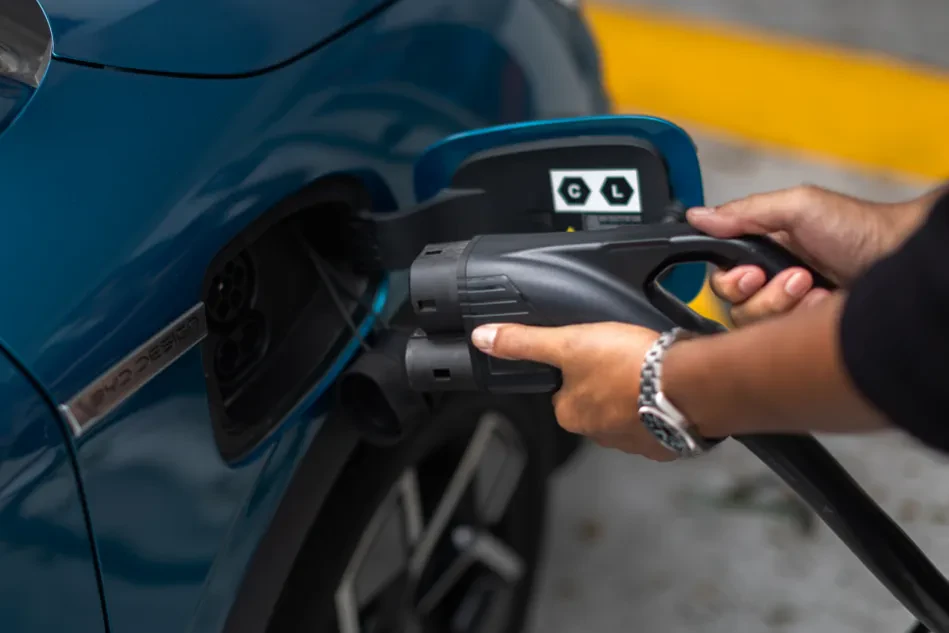
EV owners should always ensure that the charger and plug match their vehicle’s specifications. The use of adapters or extension cords is strictly not allowed, as these can cause overheating, damage both the EV and the charger, or become fire hazards.
Universally, there are two main types of EV chargers: AC (alternating current) and DC (direct current). AC chargers, which provide up to 22 kW of power, are the ones most widely available through the ACMobility network. For EVs equipped with faster on-board chargers, they can deliver a full charge in about three to four hours. For other vehicles, charging from 20% to 80% typically takes up to eight hours, depending on the battery size and conditions.
Meanwhile, ACMobility’s DC chargers deliver 60kW, 120kW, 240 kW and 480 kW of power, and can charge an EV from 20% to 80% in just 20 to 60 minutes. The 60 kW and 120 kW units are referred to as Fast Chargers and are available in multiple locations nationwide, while the 240 kW SuperFast and 480 kW UltraFast chargers are currently available at the Corinthian Carpark and Legazpi Carpark in Makati. Each charger type uses different connectors. ACMobility’s AC chargers support Mennekes (Type 2), and GB/T connectors; while its DC fast chargers support CCS2 connectors.
If EV owners are unsure of connector compatibility, they can simply register their vehicles through the Evro app. The app will automatically display the compatible connectors and identify charging stations equipped with the appropriate chargers for their specific vehicle.
Charging station etiquette
EV Charging Etiquette: Sharing the Plug for a Better Experience
Remember: Charge. End. Share
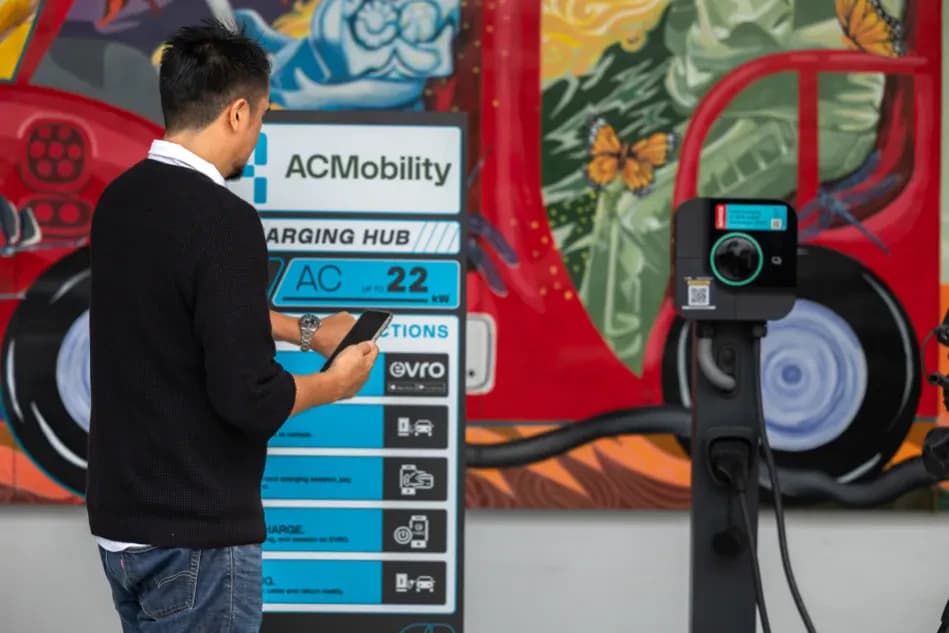
As electric vehicles (EVs) become more common, charging stations are increasingly in demand. To ensure a smooth and fair experience for everyone, EV drivers should follow basic charging etiquette. Being courteous at the plug isn’t just polite—it helps build a more sustainable and cooperative EV community.
1. Free Up the Charger When You’re Done
One of the biggest issues at public charging stations is “charger hogging.” Once your vehicle is adequately charged—especially at DC fast-charging stations—unplug and move your car. Even if the station allows longer stays, it's considerate to move on once your battery reaches 80%, where charging speed slows down anyway. AC chargers in public lots are a bit more flexible, but try not to treat them as long-term parking spots.
2. Charge When You Need It
Be mindful of your charging needs, especially at public stations. If your EV already has sufficient range for your next stop, consider saving the charger for another driver who may need it more. Thoughtful charging helps keep stations available and ensures a smoother experience for everyone.
3. Follow Posted Rules and Time Limits
Many charging stations have posted time limits or rules. Some places even charge idle fees for vehicles left plugged in after charging is complete. Respect the signage—it's there to ensure fairness and access for everyone. ACMobility EV Charging Hubs charges a P500 overstaying fee if the charging session is already complete and the vehicle is not moved after the 30 minute grace period.
4. First come, First Served
Public charging stations are open to both battery electric vehicles (BEVs) and plug-in hybrid electric vehicles (PHEVs). Charging access is offered on a first-come, first-served basis.
5. Don’t Unplug Others Without Permission
Unplugging someone else’s vehicle—even if it's fully charged—without consent is a big no-no. If a vehicle has a sign saying it's okay to unplug when done, that's different. Otherwise, respect other people’s property and charging time.
Ultimately, EV charging etiquette is about being thoughtful and efficient. By following these simple guidelines, all users—new or experienced—can have a better, less stressful charging experience. As the EV community grows, so should the spirit of cooperation at every charging station.